
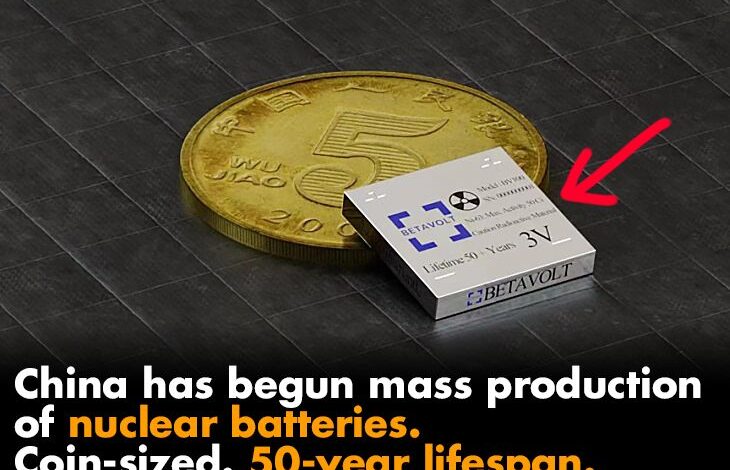
China has officially begun mass production of nuclear-powered batteries capable of lasting up to 50 years, marking a major breakthrough in energy technology.
Developed by Chinese tech firm Beta volt, the batteries are smaller than a coin and designed to deliver continuous power without the need for charging, sunlight, wiring, or routine maintenance.
READ ALSO:How to Build a Simple Locally Made Inverter for Home Entertainment
Unlike conventional batteries, Betavolt’s nuclear battery generates electricity by converting nuclear decay into energy. The device is fully sealed, emits no external radiation, and is considered safe for use in everyday environments.
What Makes the Nuclear Battery Unique
The current commercial version produces 100 microwatts, making it suitable for low-power applications such as:
Sensors
Medical implants
Tracking devices
Internet of Things (IoT) equipment
Beta volt has also confirmed that a 1-watt version is already under development, which could significantly expand its use cases.
Future Applications
The higher-capacity version could potentially power:
Drones
Industrial monitoring systems
Smart devices
Wearables
Smartphones and autonomous technology
If successful, this advancement could eliminate one of the biggest limitations of modern electronics — battery life and frequent recharging.
Why This Breakthrough Matters
Energy constraints have long slowed innovation, forcing devices to depend on charging cycles, battery degradation, and downtime. A battery capable of operating for decades without intervention could redefine autonomous technology.
Imagine:
Devices that never shut down
Drones that never need to land
Wearables that function for a lifetime
This development could represent a major step toward a future where machines operate continuously — raising new possibilities and important questions about how humans interact with always-on technology.